
A busy restaurant can have four customers waiting to order while employees are already handling orders, payments, and other front-counter tasks.
A retail store may have customers looking for product information, checking availability, or completing a purchase while staff are serving other shoppers.
The challenge is no longer simply about having enough people at the counter.
Modern businesses need to handle more interactions, across more channels, with less friction.
This is why self-service is becoming part of the way modern businesses operate.
From a Self-Service Machine to an Operating Touchpoint
A kiosk may look like a standalone piece of hardware, but its role is much bigger.
An order placed on a restaurant kiosk can move directly into the POS and kitchen workflow. A retail kiosk can connect customers with product information, inventory, payment, or online ordering.
The kiosk becomes a physical touchpoint between the customer and the digital systems behind the business.
In other words, it is not simply taking the place of a cashier.
It is helping the whole operation move.
As retail and restaurant operations become more connected and data-driven, this role will only become more important. Self-service technology is increasingly being considered part of the operational infrastructure of the modern store, rather than simply an optional convenience.
But this creates a new requirement for the hardware.
If operations are becoming more flexible, connected, and intelligent, the hardware needs to be flexible too.
Designed Around Different Operations
This is the thinking behind K1.
We did not design K1 around one fixed kiosk configuration. We designed it as a platform that can adapt to different environments and applications.
K1 is available in 23.8″, 27″, and 32″ screen sizes.
It can be configured for wall-mounted, desktop, or floor-standing installation, and can also support dual-screen setups when a project requires separate customer and staff-facing displays.
This means the same platform can be adapted to different spaces and customer journeys, instead of forcing every project into the same physical design.
The value is not simply having more choices.
It is being able to build the hardware around the operation.
Modular Inside, Not Just Outside
The same philosophy continues inside the machine.
K1 uses a modular internal structure, allowing different functional modules to be added according to project requirements.
A restaurant may need self-ordering and payment.
A retailer may require scanning, printing, or other peripherals.
A service application may require a completely different combination of functions.
Instead of creating a completely new machine for every application, K1 provides a common platform that can be configured around the specific requirements of the project.
This makes the hardware better suited to the way modern businesses operate: different applications, but a common and manageable platform.
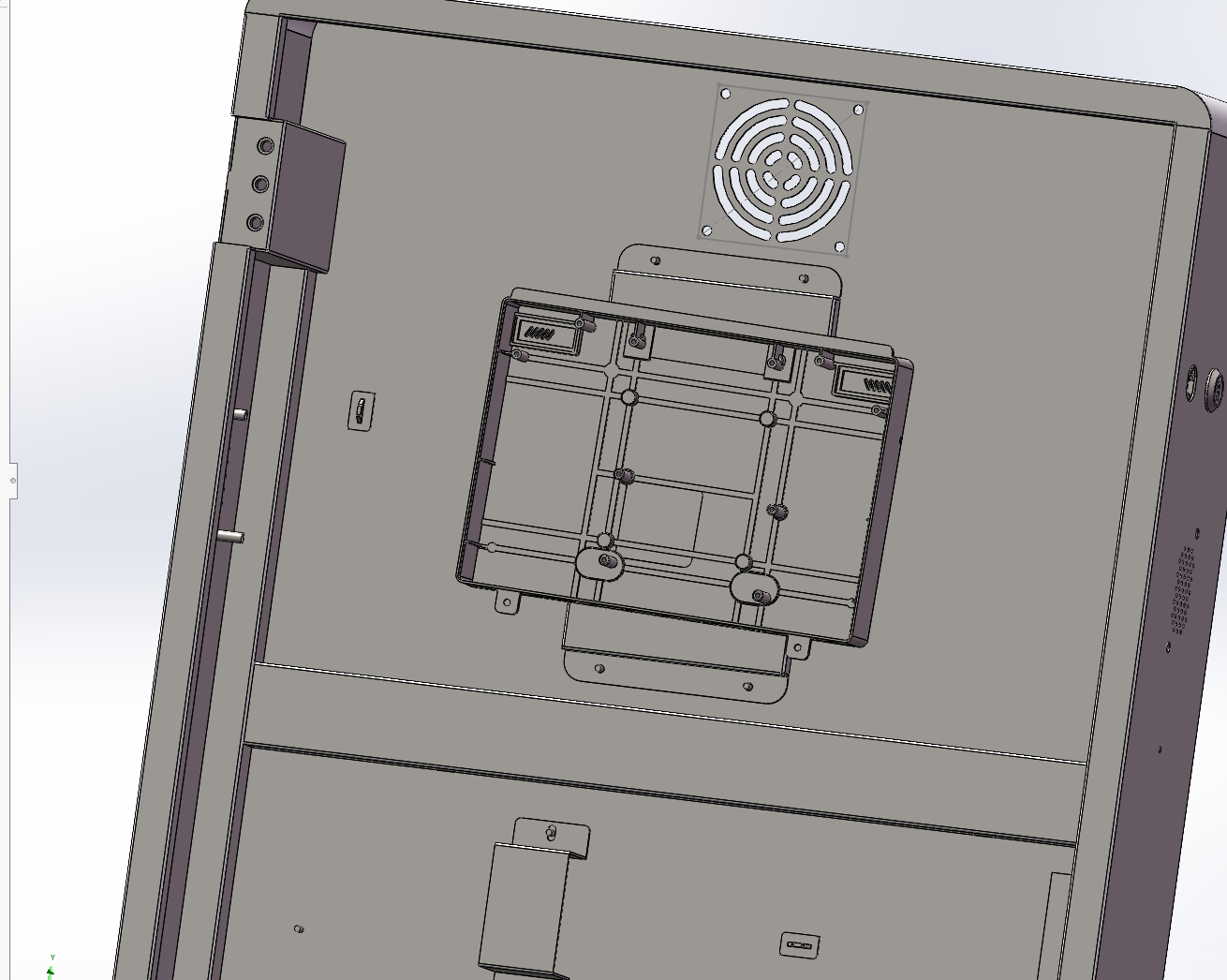
One System Box Across K1 and M6
The most important part of this modular approach is the computing system box.
K1 uses the same System Box as our flagship M6 Modular POS.
This creates a shared hardware foundation across two different types of customer-facing terminals: traditional POS and self-service.
For solution providers, this means they can build different solutions around the same computing architecture.
It can also simplify hardware management, spare parts, technical support, and future deployment.
More importantly, the system does not have to remain fixed after installation.
Designed for the Whole Lifecycle
A self-service terminal is part of a long-term operation. It may run for years, while the business around it continues to change.
That is why we designed K1 for easier maintenance and upgrades.
The System Box can be replaced separately when service is required, without replacing the complete kiosk.
When higher computing performance is needed, the System Box can also be upgraded.
This turns modularity into something more meaningful than a design feature.
It helps businesses maintain, upgrade, and extend the life of their hardware as their operations evolve.
Hardware That Adapts to Intelligent Operations
The future of retail and service is not about adding more hardware for the sake of technology.
It is about creating a more connected operation, where customers, employees, software, and physical devices work together more efficiently.
Kiosk is becoming one of the important physical touchpoints in that system.
And for that reason, we believe the hardware behind it should not be rigid.
It should be configurable.
It should be serviceable.
It should be upgradeable.
And it should be ready to evolve.
That is the idea behind K1: a modular self-service platform designed not only for today’s applications, but for the way modern businesses will operate tomorrow.